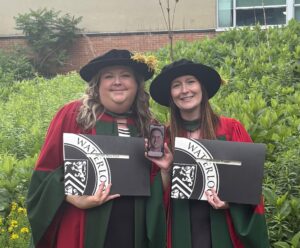
A new paper by ARCH Lab’s Dominique Basque —who recently successfully defended her PhD thesis—explores how chronic physical illness in children affects the well‑being of their siblings. The paper, titled “Sibling psychopathology as a mediator between disability in youth with chronic physical illness and sibling health‑related quality of life,” was recently published in Health and Quality of Life Outcomes.
Using data from the long‑running Multimorbidity in Children and Youth Across the Life‑course (MY LIFE) Study), the research followed 171 families over four years. Parents reported on the level of disability of the youth with chronic physical illness (YwCPI), the sibling’s mental health, and the sibling’s health‑related quality of life across physical, emotional, social, and school domains.
The findings reveal a clear pattern: greater disability in the YwCPI is associated with more emotional and behavioural difficulties in their siblings. These mental health problems, in turn, are strongly linked to lower well‑being across all measured areas—meaning siblings may struggle physically, emotionally, socially, and academically when their brother or sister experiences significant illness‑related limitations.
Crucially, the study shows that sibling mental health is the key mechanism connecting the YwCPI’s disability to the sibling’s quality of life. This suggests that it’s not only the illness itself that affects siblings, but how that illness shapes their emotional experiences and day‑to‑day stress.
These results highlight an important need: family‑centred care must include siblings, not just the child receiving treatment. Early screening for mental health concerns, coping‑skills training, open family communication, and school‑based supports may help buffer the challenges siblings face. This work underscores a powerful truth—meaningful support for a child with chronic illness is impossible without equally supporting their siblings and the wider family system.